
The other day on Instagram, a friend of mine, who also was in her 30s like me, shared this Christmas wish list meme:

I had a little laugh because I totally can do with some uninterrupted sleep, the ability to pee alone, and 12 million dollars. Then, it occurred to me just how common lower back pain is, so much so that is how we bond in adult friendships.
In fact, it is estimated that 79% of Australians get affected by lower back pain at some stage in life. 79% – that’s not a small number!
So, that led to me digging up one of the research papers I read before on the relationship between foot posture, leg length difference and lower back pain. You can read the snippets on ScienceDirect .
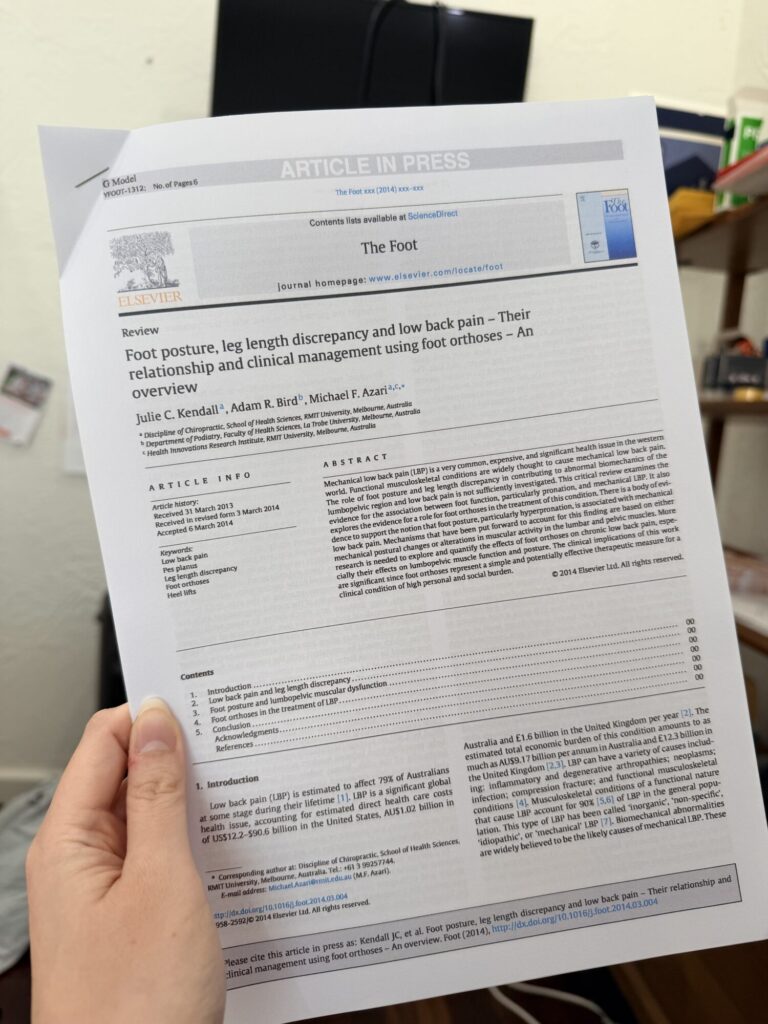
In this research paper, Kendall and her team were trying to explore the impacts of foot posture and leg length difference on lower back pain, as well as the effectiveness of managing lower back pain with orthotics. Their research was based on selecting and reviewing existing research papers at that time related to their topic.
Lower back pain can have a variety of causes, including inflammatory and degenerative joint disorders (e.g. osteoarthritis), tumors, infection, compression fracture and musculoskeletal conditions. In the general population, musculoskeletal conditions account for approximately 90% of lower back pain cases which are often known as “mechanical lower back pain”.
The two lower-limb-specific causes related to mechanical lower back pain are limb length difference and foot posture.
How does limb length difference cause lower back pain?
The difference in limb lengths leads to asymmetrical, uneven weight bearing at the hips and lower back due to increased lateral tilting of the hips.
In one of the studies Kendall and her team reviewed, participants with more than 10mm of limb length difference experienced poorer functional outcomes 3 years after a hip replacement.
On top of that, postural changes and bnormal weight bearing associated with limb length difference have also been shown to correlate with hip osteoarthritis, as well as knee osteoarthritis.
How does foot posture cause lower back pain?
Postural abnormalities in the feet have the ability to disturb normal muscle and joint biomechanics in the lower back, creating stress and strain in the lower back area. Those with lower back pain tend to have less upward movement of the ankle and a greater degree of arch collapse.
Because our lower limb is a connected chain, whether the foot rolls in or out, the leg and thigh then follow by rotating in or out respectively and the pelvis tilting forward or backward respectively. This chain of actions leads to uneven loading of the lower back area and muscle imbalance, ultimately leading to pain in the lower back.
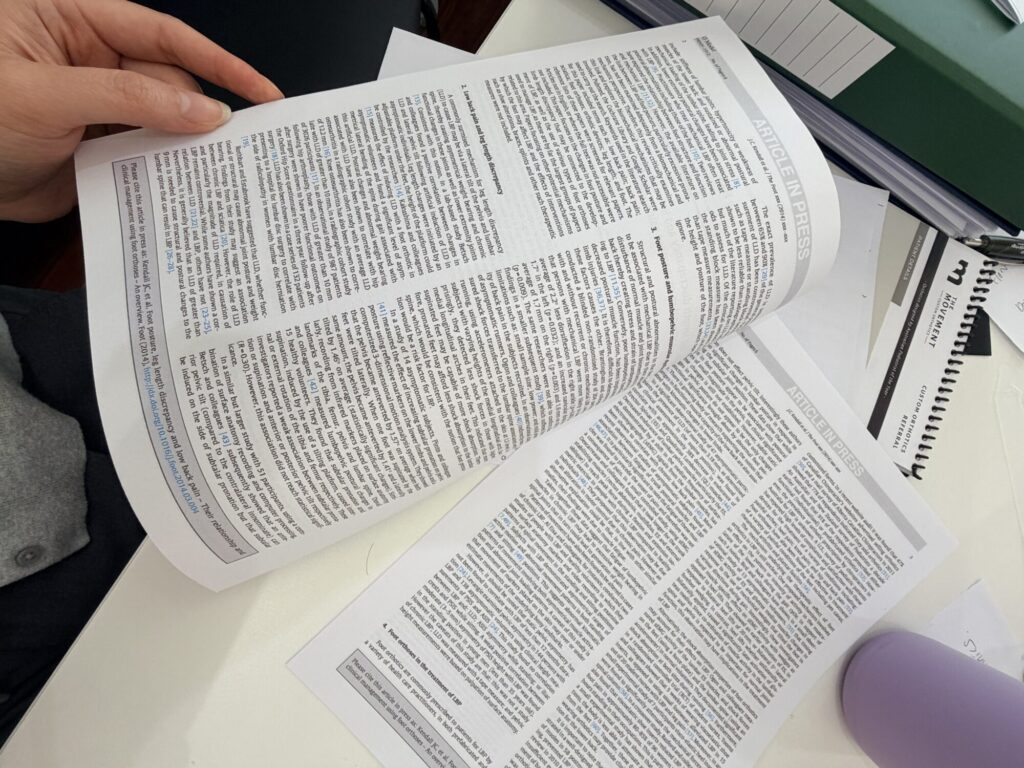
How orthotics can help in the treatment of lower back pain
- Orthotics have the ability to alter foot posture (rolling in, rolling out), thereby re-aligning the entire lower limb chain for a more even load distribution at the lower back
- Orthotics can change the firing patterns of the lower back and hip muscles, improving muscle coordination which is essentially for normal lower back function.
- Orthotics can provide better shock absorption for the lower back. Under fatigue conditions, like hours of standing at work, the body is less able to attenuate and dissipate shock forces from the feet, so wearing orthotics may help bridge the gap.
In a double-blinded randomised clinical trial, as reviewed by the researchers of this paper, those given custom orthotics designed to support the medial arches and prevent excessive pronation experienced a significant decrease in lower back pain over a 4-week period.
So, what’s our take?
The findings are consistent with what we see in real life at our clinic. All parts of the lower limb are connected. Nothing exists in isolation. So, when symptoms show up in the lower back, it makes sense to look beyond the lower back and trace back to the foundation of our body – our feet. For instance, flat feet are very common in those experiencing lower back pain. Sometimes there is a connection; sometimes there isn’t, and the only way to find out is by doing a biomechanical assessment.
Many of our clients with lower back pain come to us after having tried everything under the sun – phyio, chiro, exercise, cortisol, anti-inflammatories, painkillers…And, the first thing they say to us is: “I think my back pain may be coming from my feet”.
If you have been struggling with lower back pain for longer than you’d like, it’s time to look at whether your feet are the culprit. You don’t need a referral to book a biomechanical assessment. Simply book an Initial Consultation on our website.
Thank you for dropping by. See you next time!