
01
What are flat feet?
Flat feet, also called fallen arches or pes planus, are a foot type where the arch on the inside of your foot is lower than usual or absent entirely. When you stand, more of your sole touches the ground than would be typical. About 40% of the adult population have flat feet. That's close to half of the people you know!
02
Why flat feet matter
Flat feet are often treated as a cosmetic difference, but the arch isn't there for looks. It absorbs load, transfers force through your body, and lets your foot adjust to uneven surfaces. Feet are the foundation of your body. When the foundation isn't working as it should, the rest of the body adjusts to take up the difference, and that adjustment often shows up as pain or fatigue elsewhere — in the knees, hips, or lower back.
03
Types of flat feet
Flat feet come in three main types, and the distinction matters because they need to be approached differently.
Types of Flat Feet
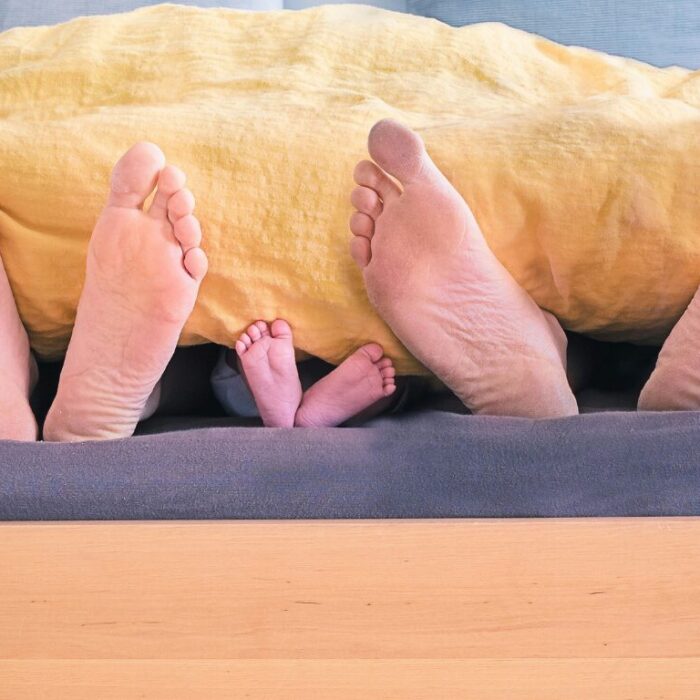
Flexible flat feet
are the most common. The arch appears when you're sitting or standing on tiptoes but flattens when you put weight through the foot. Most people with flat feet have this type.
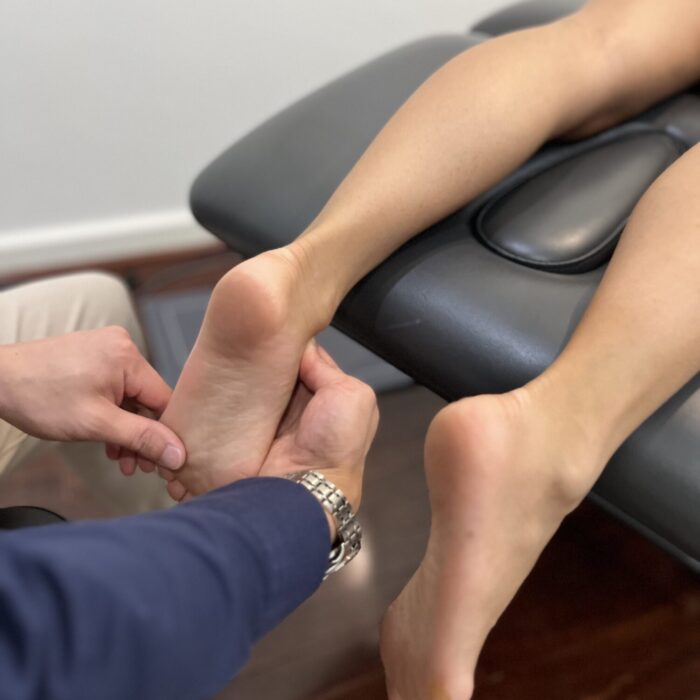
Rigid flat feet
are flat in all positions: sitting, standing, on tiptoes. This is less common and often indicates a structural issue that needs different management.
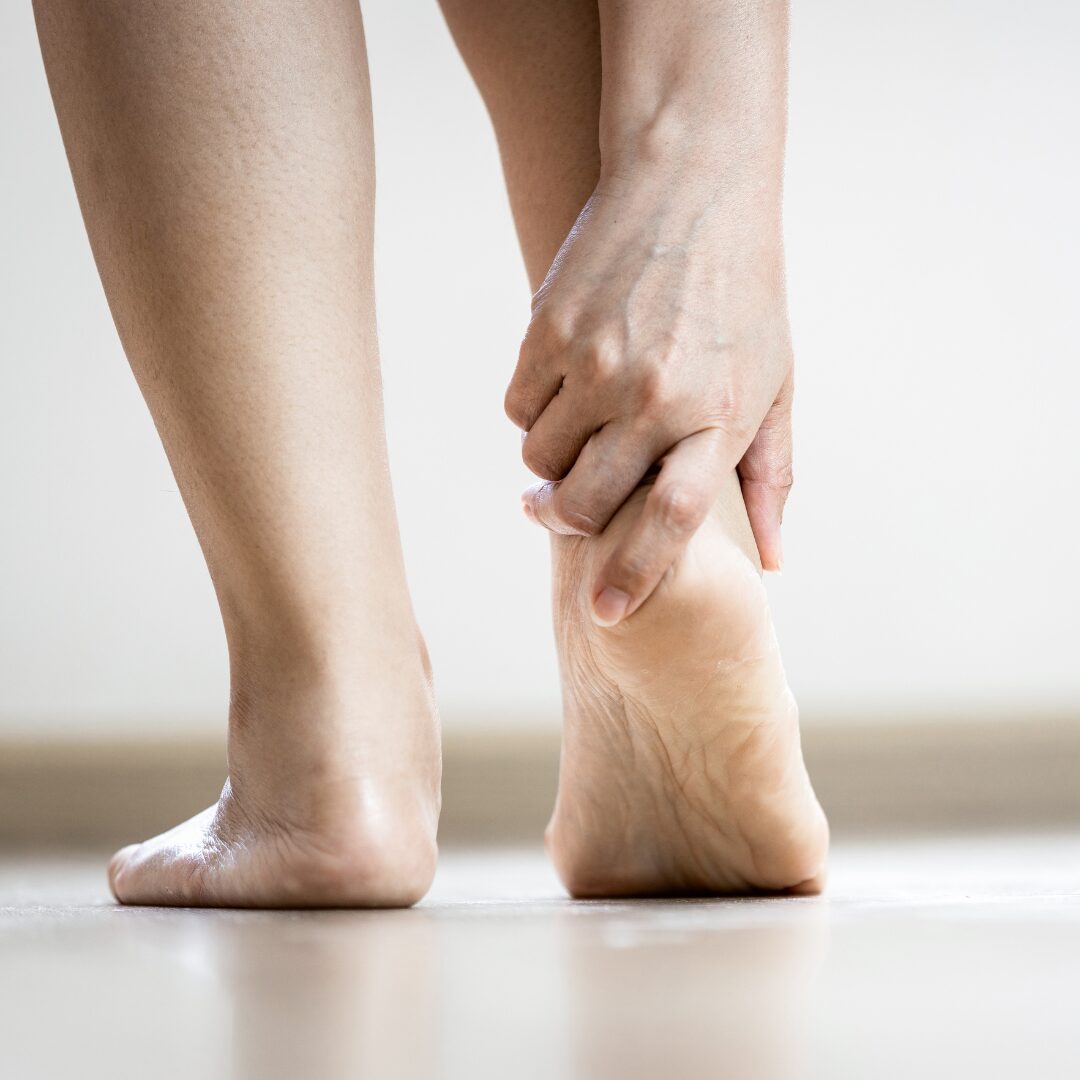
Adult-acquired flat feet
develop in adulthood, usually due to injury, tendon dysfunction, or progressive collapse of a previously normal arch. This is a distinct clinical picture and often more severe than other types.
How we think about flat feet
At The Movement, our Bayswater clinic in Perth, flat feet are assessed as part of a broader biomechanical evaluation. We look at how the whole foot is working under load, how that affects what’s happening higher up the body, and what would actually help.
The goal is to understand what your feet are actually doing, and what we could do to help that would make a meaningful difference.
What causes flat feet
Genetics
Flat feet often run in families. The shape of your arch is influenced by inherited factors affecting bone structure, ligament laxity, and connective tissue. A 2025 systematic review confirmed that foot arch morphology has a significant genetic component, with multiple genetic markers associated with flat foot development.
Body weight
Higher body weight increases the load on the arch over time, and recent genetic research has established this as a direct causal effect, not just a correlation.
Age
Feet change as we age. Tendons lose elasticity, ligaments stretch, and arches can gradually flatten.
Injury
Damage to the tendons or ligaments that support the arch, particularly the posterior tibial tendon, can lead to arch collapse.
Pregnancy
Hormonal changes during pregnancy increase ligament laxity, and many women develop flatter feet that persist afterward. Research has documented permanent decreases in arch height following pregnancy, with most changes occurring during the first pregnancy.
Occupation & activity
Prolonged standing, heavy lifting, and certain types of repetitive loading can contribute to arch flattening over time.
FREQUENTLY ASKED QUESTIONS
ABOUT FLAT FEET
Flat feet are a variation in foot structure where the arch on the inside of your foot is lower than usual or absent entirely. When you stand, more of your sole contacts the ground than would be typical. The condition is also called fallen arches or pes planus.
The wet footprint test gives a rough indication: wet your feet, stand on a dry surface, and look at the print. If you see your full sole with no curve on the inner side, you likely have flat feet. But the test misses flexible flat feet, where the arch looks normal at rest and only collapses under load. A thorough assessment with a podiatrist will give you a more complete indication.
Genetics, body weight, age, injury, pregnancy, and occupational loading. Most people with flat feet have more than one factor at play.
Foot structure has a strong genetic component, and flat feet tend to run in families. Bone shape, ligament laxity, and connective tissue are all influenced by what you inherited, though environment, activity, weight, and footwear also play a role in how flat feet develop.
Flat feet and pronation are closely related, and the terms get used interchangeably in everyday conversation. Strictly, flat feet describe the shape of your foot, how much arch you have, while pronation describes a movement, the way your foot rolls inward as you walk. The two often go together: flat feet usually pronate more, and excessive pronation often involves arches that collapse under load. But you can have one without the other in pure form.
What matters more than the label is what your feet are actually doing under load, which is what an assessment looks at.
Flat feet tend to either stay the same or worsen over time. Tendons and ligaments lose elasticity, and arches that were borderline in youth often flatten further in later decades. Improvement without intervention is uncommon.
SYMPTOMS & PAIN OF FLAT FEET
The problems flat feet cause can be in the feet themselves or anywhere above them. Foot fatigue, arch pain, and discomfort after long days on your feet are common, and so is pain in the knees, hips, and lower back. Feet are the foundation of the body, and the rest of the body has to work around what isn’t holding up at the foundation.
Research has found people with flat feet are more than twice as likely to experience lower back pain as those with normal arches. The mechanism relates to how foot mechanics affect the way the body has to absorb and distribute load, and that altered loading often shows up as back pain.
Knee pain is one of the most common ways flat feet show up away from the feet themselves. When feet don’t track well, the knees take up the difference, which can lead to pain, wear, or alignment issues over time. Flat feet are frequently implicated in knee pain even when the feet themselves aren’t the main symptom.
Hip pain is a common upstream effect of flat feet. When the foot rolls inward excessively, the knee tends to follow, and the hip rotates inward in adjustment. Over time this altered alignment puts uneven load on the hip joint and the muscles around it, which can show up as hip pain, tightness, or a sense of the hip “not feeling right” during movement.
Shin splints (medial tibial stress syndrome) are one of the more common ways flat feet show up during exercise. The pain comes from a combination of overload at the muscle attachments along the inner edge of the shinbone and stress on the bone itself, which can bend or remodel under repetitive loading. Flat feet and overpronation alter how that load transmits up the leg, increasing the risk.
Shin splints are particularly common in runners, dancers, and people doing high-impact activity.
Flat feet are a recognised risk factor for plantar fasciitis, the most common cause of heel pain.
When the arch collapses under load, the plantar fascia (the band of tissue running along the bottom of the foot) gets stretched repeatedly, and that strain leads to inflammation, pain, and small tears.
Plantar fasciitis pain is usually worst with first steps in the morning or after long periods of sitting.
Arch pain is one of the more direct symptoms of flat feet. When the arch can’t hold its shape under load, the structures that should be sharing the work, including bones, ligaments, and tendons, endup overloaded. That overload often shows up as a deep ache through the middle of the foot, particularly after standing or walking for long periods.
Inner ankle pain in someone with flat feet often involves the posterior tibial tendon, which runs behind the inner ankle bone and helps support the arch. When the arch is collapsing under load, that tendon works harder to support what the arch should be doing, and over time it can become inflamed, painful, or progressively damaged.
Flat feet change the angle the Achilles tendon pulls through, putting it under uneven strain rather than clean linear load. Over time this contributes to Achilles tendinopathy, tightness, and pain at the back of the heel. People with flat feet are also more likely to have tight calves, which compounds the issue.
People with flat feet often also have tight calves and Achilles tendons. The two commonly appear together as part of a broader pattern affecting how the lower leg functions, particularly during walking, running, or extended periods on your feet. Whether one causes the other is less important than recognising that addressing flat feet often involves looking at calf and ankle mechanics together.
There’s a strong association. Bunions develop when the big toe drifts inward toward the second toe and the joint at the base of the big toe protrudes outward.
Flat feet contribute to this through altered loading patterns: when the arch collapses, more load shifts to the inside of the forefoot, which over time pushes the big toe out of alignment.
Studies have found bunions to be substantially more common in people with flat feet, and bunion severity tends to track with flat foot severity.
Knee osteoarthritis is the arthritis most clearly linked to flat feet. Flat feet change how force transmits up through the knee, often increasing pressure on the inner side of the joint. Over years, that altered loading contributes to cartilage wear. Research has found a clear association between flat foot severity and knee osteoarthritis severity, with the worst cases of flat feet tending to coexist with the worst cases of knee OA.
Midfoot arthritis is more common in people with flat feet, particularly in the joints between the small bones of the midfoot. When the arch collapses under load, those joints absorb force they weren’t designed to absorb in that pattern, and over years the cartilage in them wears unevenly.
Midfoot arthritis often shows up as a deep ache or stiffness through the middle of the foot, particularly with prolonged standing or walking.
CHILDREN WITH FLAT FEET
Many children do develop arches as they grow. A significant number don’t, and they carry flat feet into adulthood. There’s no reliable way to tell from looking at a young child’s feet which group they’re in. What’s worth knowing is that childhood is the only window when foot structure can still change. While the foot is still growing, proper support can produce structural change. After the foot has finished growing in adolescence, the option to reshape the foot is gone.
In many cases, yes. A 2024 meta-analysis of randomised controlled trials found that foot orthoses produced significant improvement in foot structure in older children with flexible flat feet, with changes visible on imaging rather than just symptom relief. This is only possible while the foot is still growing — once growth plates close in adolescence, the option closes with them.
It depends on the child. For symptomatic children, or children whose feet aren’t likely to develop normally on their own, orthotic intervention during the growth years can produce structural change that isn’t possible later. For children whose flat feet are going to resolve naturally, orthotics may not be needed. The way to find out which group a specific child is in is through a proper assessment.
If you have any concerns about your child’s feet, an assessment is worth doing. You don’t need to wait for pain. Particular reasons to come in include flat feet that run in the family (siblings, parents, grandparents), feet that look noticeably different from their peers, fatigue or reluctance to walk longer distances, or general uncertainty about whether their feet are developing normally.
SPORT & ACTIVITY WITH FLAT FEET
They can. Plenty of athletes at all levels have flat feet and perform well, so flat feet aren’t a barrier to playing sport. But they do change how the body handles repetitive load.
Runners, hikers, weight-trainers, and anyone doing impact sport may find flat feet contribute to recurring issues such as shin splints, knee pain, heel pain, and fatigue that doesn’t resolve.
For active people experiencing nagging or recurring issues, foot mechanics are often involved even when the symptoms aren’t in the feet.
Many people with flat feet run without issue. Running with suboptimal foot mechanics does put more load on the rest of the body, so for runners experiencing recurring pain or injury, a proper assessment is worthwhile to identify whether foot mechanics are contributing. Some runners come in not because something hurts but because they want to understand what their feet are doing and whether better support could improve how efficiently they run.
TREATMENT & ASSESSMENT FOR FLAT FEET
In adults, the structure of the foot itself doesn’t change. What can change is how your feet work, how they distribute load, how they feel, and whether they’re contributing to problems elsewhere. Proper support can meaningfully change foot function and the way your whole body moves.
In children, the picture is different. Orthotic intervention during the growth years can produce measurable structural change.
Shoes with moderate support, adequate cushioning, and a stable structure work well for most people with flat feet. Avoid shoes that are completely flat and unstructured for prolonged wear. The support shoes provide is generic, though, not matched to your specific mechanics. Custom orthotics inside good shoes produce results that shoes alone don’t.
For most people with flat feet, orthotic support produces a meaningful improvement. It changes how your foot meets the ground, how it distributes load, and how much the rest of your body has to work around what isn’t quite right at the foundation. The degree of benefit varies depending on what your feet are doing, what you’re using them for, and what’s possible to change. Custom orthotics, designed for your specific feet, do work that off-the-shelf inserts can’t.
If you have flat feet, the question worth answering isn’t whether you “need” orthotics, it’s whether your feet would work better with them. For many people, the answer is yes, and the difference shows up beyond just the feet, including back, knees, hips, and fatigue at the end of the day. An assessment is how you find out whether orthotics would make a meaningful difference for your specific situation.
People come and see us for all kinds of reasons. Some of the most common include:
- Pain. If your feet hurt, or your back, knees, or hips ache and you suspect your feet might be involved.
- Family history. If flat feet run in your family and you want to know whether yours are heading the same way.
- Occupational loading. If you’re on your feet for work and want to know how your mechanics are holding up.
- Uncertainty. If you’re not sure whether you have flat feet or just think you do.
- Prevention. If you want to understand what your feet are doing before something starts hurting.
Ready to get your flat feet assessed?
No referral needed. Seen by Perth's award-winning podiatry team at our Bayswater clinic.